Earthing Rod Specification
- Operating Temperature
- -10C to +55C
- Efficiency
- Greater than 95%
- Feature
- Corrosion Resistant
- Connector Type
- Clamp/Threaded
- Mounting Type
- Direct Burial
- Overheating Protection
- YES
- Product Type
- Earthing Rod
- Application
- Electrical Grounding
- Output Type
- Earth Discharge
- Dimension (L*W*H)
- 1200 mm x 16 mm x 16 mm
- Material
- Copper Bonded Steel
- Connection Type
- Threaded Coupler
- Corrosion Test
- ASTM B-117 Passed
- Coating Thickness
- Minimum 250 Microns Copper Coating
- Conductivity
- High Conductivity Copper Bonded
- Inner Core
- High Tensile Low Carbon Steel
- Tensile Strength
- 600 N/mm2
- Storage Condition
- Dry, cool place
- Minimum Soil Resistivity
- Less than 5 Ohm-meter
- Environmental Resistance
- UV and Weather Resistant
About Earthing Rod
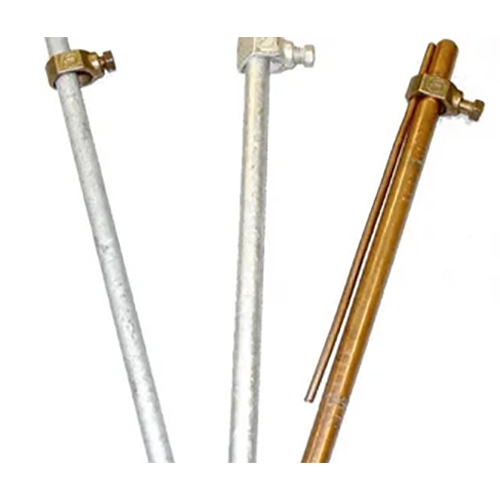
An earthing rod is a metal rod, usually made of galvanized iron (GI), copper, or copper-bonded steel, used in electrical grounding systems. It is driven deep into the ground to safely carry fault current into the earth. Earthing rods help protect people and electrical equipment from electric shocks, short circuits, and lightning. They are widely used in residential buildings, industries, substations, and power systems. Earthing rods are durable, corrosion-resistant, and ensure proper electrical safety.
 Send Inquiry


 Send Inquiry


 Send Inquiry
 English
 Spanish
 French
 German
 Italian
 Chinese (Simplified)
 Japanese
 Korean
 Arabic
 Portuguese